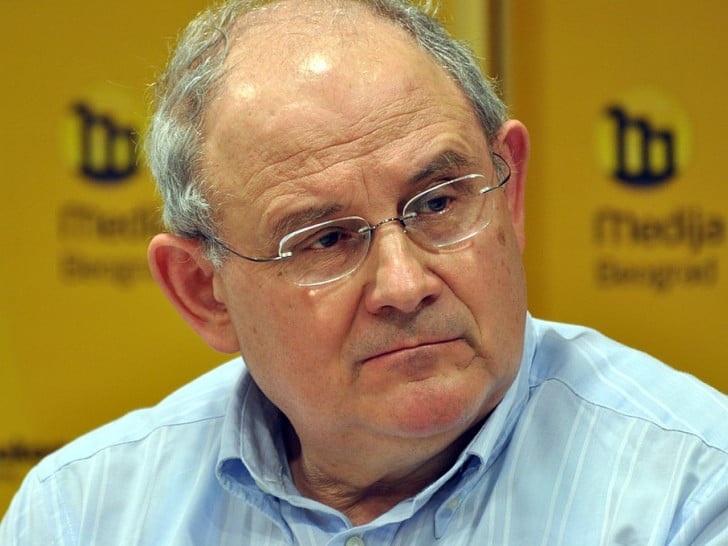


Kosta Čavoški, a member of the Serbian Academy of Sciences and Arts (SANU), has called for the closure of the Office of the High Representative (OHR) in BiH, arguing that representatives of the country’s constituent peoples should determine its political future through mutual agreement.
Speaking to SRNA ahead of the 31st anniversary of the Dayton Peace Agreement, Čavoški said the OHR had failed to fulfill its purpose and that its closure should receive support from international powers.
Čavoški criticizes OHR’s role in BiH
Čavoški argued that the establishment of the OHR and the appointment of foreign high representatives had been problematic from the outset.
He accused successive high representatives of exceeding their authority, imposing legislation and restricting the constitutional powers of Republika Srpska.
“The first problem was the imposition of the OHR and foreign high representatives, who largely abused their positions and imposed laws by force,” Čavoški said.
He identified the reduction of Republika Srpska’s competencies as another major concern.
According to Čavoški, the OHR has also failed to establish the conditions necessary for BiH’s institutions to function effectively.
“The high representatives and the OHR have not enabled BiH to function properly. After the adoption of the Dayton Agreement, it has undoubtedly become a failed state,” he claimed.
Čavoški maintained that these developments demonstrate the need to end international supervision and allow domestic political representatives to negotiate the country’s future.
Čavoški advocates Republika Srpska’s independence and closer ties with Serbia
Discussing possible future constitutional arrangements, Čavoški expressed support for Republika Srpska declaring independence at a politically favorable moment.
He argued that Republika Srpska should subsequently move toward unification with Serbia, reflecting his belief that Serbs should live within a single state.
Čavoški also proposed that Croats in BiH could join Croatia, while Bosniaks could establish their own state.
“On the other hand, Croats in BiH could unite with Croatia, while Muslims, or Bosniaks, could establish their own state. I believe that would bring peace to Bosnia, particularly if the borders between those states were inviolable,” Čavoški said.
These proposals represent Čavoški’s personal political position rather than the constitutional arrangements currently established under the Dayton Peace Agreement.
Dayton Peace Agreement marks 31 years
November 21, 2026, marks the 31st anniversary of the initialing of the General Framework Agreement for Peace in BiH at Wright-Patterson Air Force Base in Dayton, Ohio, in 1995.
The agreement, together with its 12 annexes, established the framework for ending the war in BiH and defining the country’s postwar constitutional structure.
Under the Dayton constitutional arrangement, BiH consists of two entities: Republika Srpska and the Federation of BiH.
The agreement also established the international civilian implementation framework under which the Office of the High Representative operates.
As the anniversary approaches, Čavoški argues that the time has come to close the OHR and transfer full responsibility for BiH’s political future to its constituent peoples and their representatives.
Source: Glas Srpske