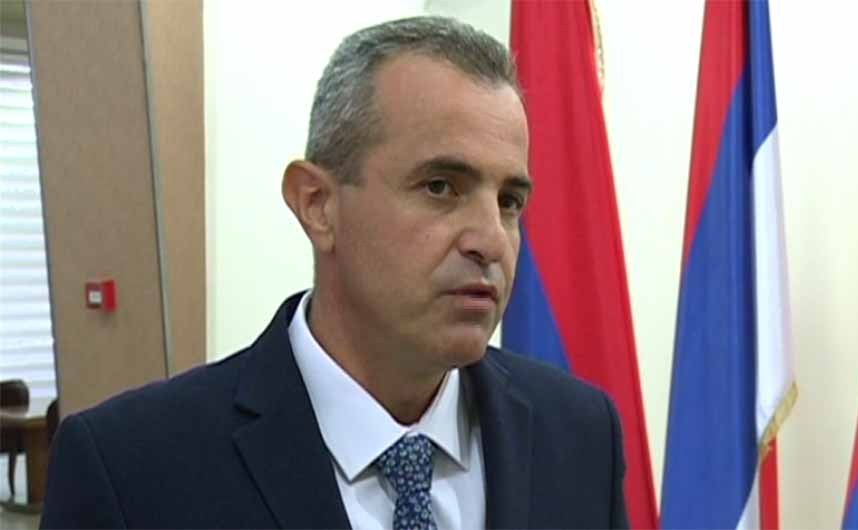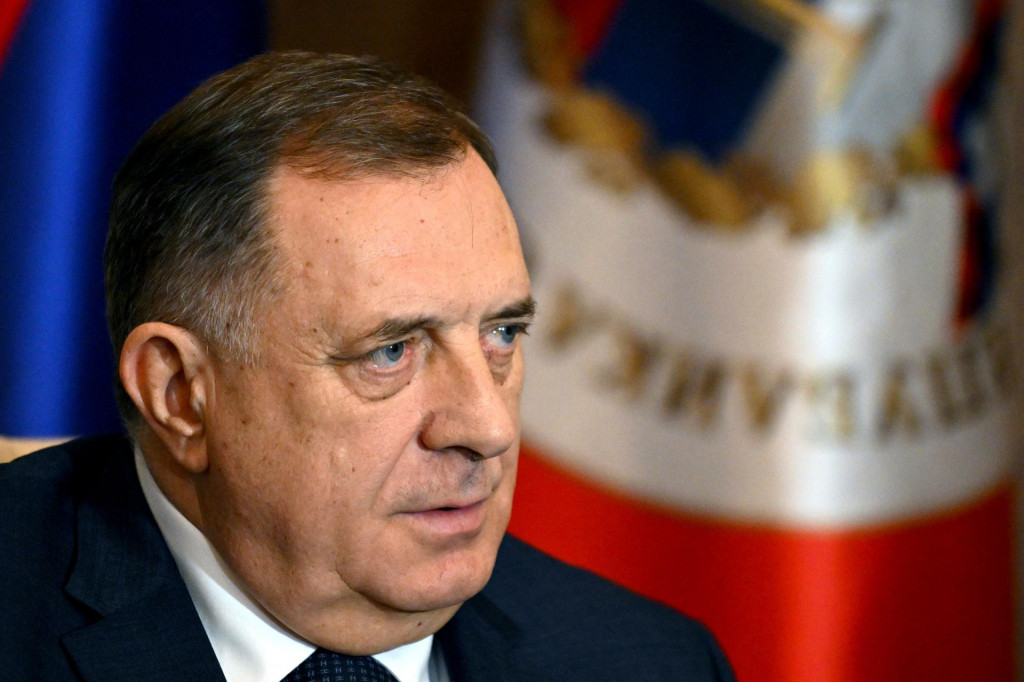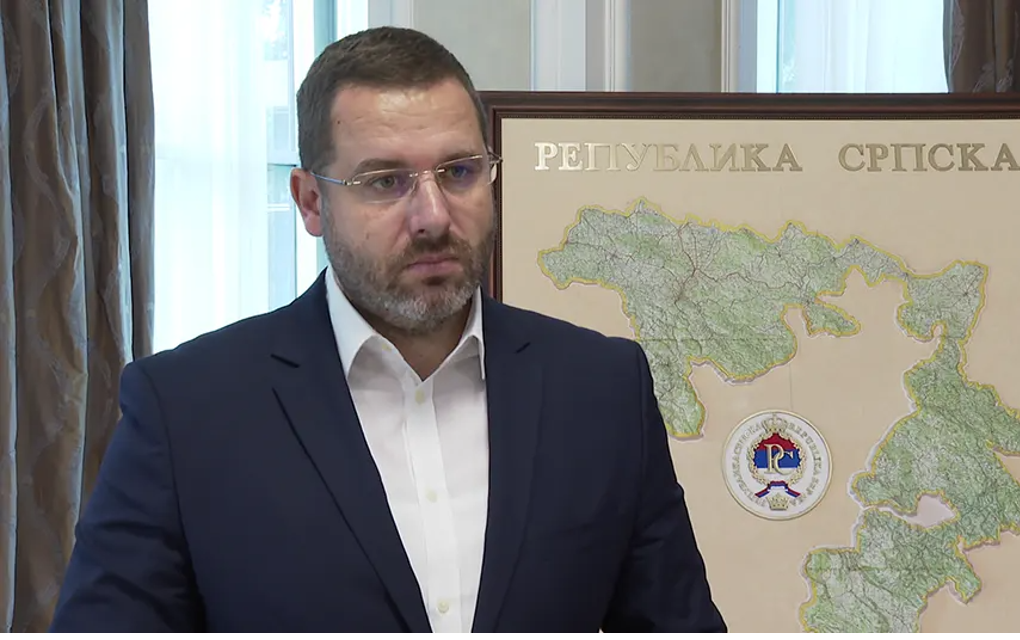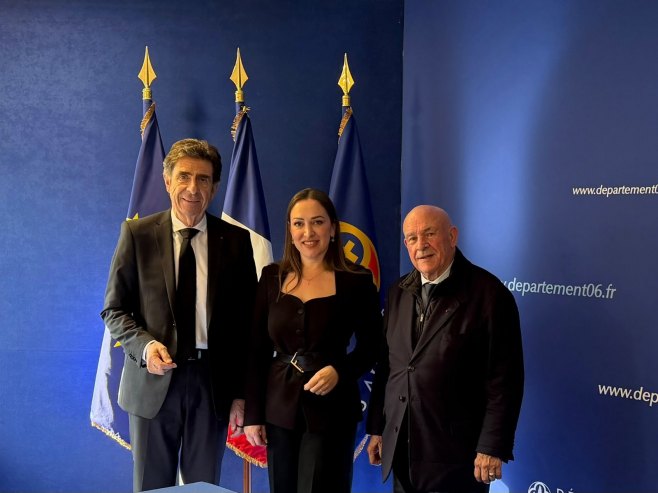
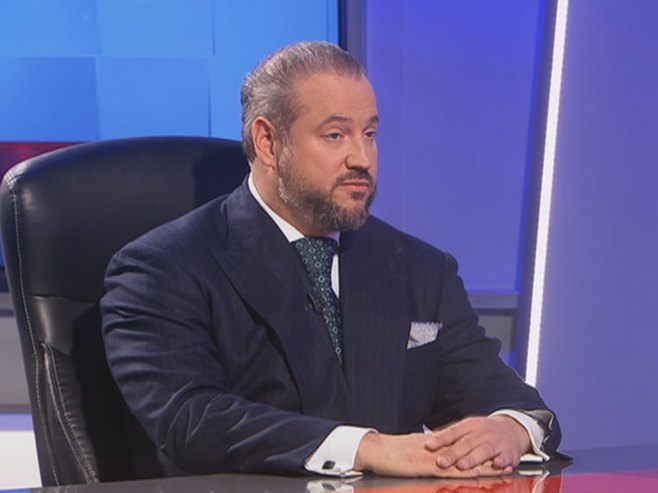

Filip Gašpar, an associate of an Alternative for Germany (AfD) member of the Bundestag, has said that citizens of BiH should independently elect their political representatives without foreign interference. Appearing on RTRS’s Telering program, he praised Milorad Dodik’s political approach, describing it as a persistent struggle for the interests of his people.
Gašpar also criticized the role of Christian Schmidt and the Office of the High Representative (OHR) in BiH, arguing that political decisions should remain the responsibility of democratically elected domestic institutions.
Gašpar praises Dodik’s political determination
Commenting on Dodik’s political activities, Gašpar expressed strong support for his approach.
“His policies are excellent, and he is persistent in his struggle. I wish we had a German politician who fought for his own people rather than for others,” Gašpar stated.
He emphasized that citizens should have the right to choose their representatives and hold them accountable for their decisions.
According to Gašpar, this principle should apply equally to BiH and other countries.
Criticism of Christian Schmidt and the OHR
Gašpar questioned the continued presence of international political supervision in BiH more than three decades after the war.
“Why do we still need some kind of colonizer here after 30 years, someone who behaves arrogantly toward people as though they are incapable of doing anything themselves?” he asked.
He argued that the political forces responsible for sending Schmidt to BiH are the same ones claiming that conditions in Germany have never been better.
Gašpar said his position reflects the AfD’s opposition to interference in the internal political affairs of other countries.
“We do not interfere in developments in other countries. The same position applies to the Office of the High Representative in BiH. A third party has no business interfering there,” he said.
Discussing BiH’s political system, Gašpar reiterated that citizens should independently elect their representatives and accept responsibility for their electoral choices.
AfD’s political ambitions in Germany
Turning to German domestic politics, Gašpar said support for Alternative for Germany was growing.
He suggested that the party’s increasing popularity could eventually create an opportunity for an AfD politician to become Germany’s chancellor.
Gašpar also criticized what he described as a tendency among established German political parties to label opponents as Nazis when they express dissenting views.
He argued that excessive use of such accusations weakens their historical significance.
“We eventually reach a situation where everyone is a Nazi, which means that nobody is a Nazi anymore,” Gašpar said.
He added that careless political labeling could also diminish the suffering of victims of Nazi and other fascist regimes, including the Independent State of Croatia (NDH).
Gašpar criticizes Germany’s political establishment
Gašpar accused members of Germany’s political establishment of avoiding substantive arguments when confronted with opposing views.
He criticized political debates concerning gender identity and climate policy, questioning what he considered the priorities and responses of government ministers.
According to Gašpar, political opponents are too frequently subjected to ideological accusations rather than engaged in meaningful debate.
“When you have no arguments left, the easiest thing is to immediately declare someone a Nazi. In a way, I even find that amusing,” he stated.
Germany does not want war with Russia, Gašpar says
Addressing international security and Germany’s relationship with Russia, Gašpar rejected the suggestion that the German population wants a military confrontation with Moscow.
He argued that ordinary Germans have no desire for war with Russia or any other country.
“The German people do not hate Russia, and they did not ask for this war. It is the German people who are paying the price for everything,” Gašpar said.
He also emphasized the economic importance of Russian energy supplies to Germany.
“German citizens understand that without Russian energy resources, their economy suffers. They do not want war, and that is evident,” he added.
Gašpar concluded by reiterating his opposition to foreign political interference and emphasizing the importance of national sovereignty, democratic accountability and the right of citizens to determine their own political future.
Source: RTRS