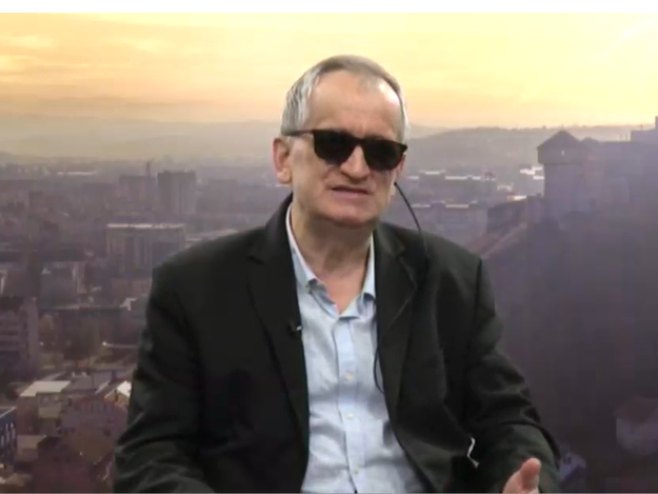

The visit of Iranian Ayatollah Alireza Arafi to Sarajevo could have political consequences for BiH, as it sends a message to the United States and Western countries, security expert Dževad Galijašević has warned.
Galijašević argued that Arafi’s arrival in Sarajevo should not be viewed exclusively as a religious visit, given his influential position within Iran’s political establishment.
He noted that Arafi is a member of Iran’s Guardian Council, a powerful political institution with an important role in the country’s system of government.
According to Galijašević, this makes the visit more than a meeting between representatives of two religious communities.
Galijašević warns of implications for relations with the West
Galijašević expressed concern that such diplomatic and political contacts could affect BiH’s international position, particularly in the context of Iran’s relations with the United States and Western countries.
He interpreted the visit as a political message of defiance toward the West coming from Sarajevo.
“We must effectively decide whether we want to become a proxy force for Iran and whether a country taking such a position can remain on the path toward the European Union,” Galijašević warned.
He argued that the political implications of the visit should be considered alongside BiH’s foreign policy priorities and European integration aspirations.
Iran’s wartime role in BiH
Galijašević also referred to Iran’s involvement during the war in BiH, claiming that Iranian military and intelligence structures participated in organizing mujahideen units.
He further alleged that personnel associated with Iran’s Islamic Revolutionary Guard Corps were present in the region during that period.
In his assessment, these historical connections provide additional context for understanding contemporary relations between Iran and political and religious institutions in Sarajevo.
Iranian cultural and media organizations in Sarajevo
Galijašević pointed to the presence of Iranian media, research and cultural organizations in Sarajevo.
Among those he mentioned were Sahar television, the Ibn Sina Research Institute and the Iranian Cultural Center.
He argued that the activities of these organizations should be examined within the broader political context of relations between Iran and BiH.
Galijašević also highlighted the theological differences between Iran’s predominantly Shia Islamic tradition and the Sunni tradition followed by most Muslims in BiH.
He suggested that these differences further support his interpretation of Arafi’s visit as primarily political rather than religious.
Visit presented as religious ceremony
Galijašević concluded that the visit’s public presentation did not, in his view, reflect its broader political significance.
“This is not a visit by one religious community to a closely related religious community. This is a political visit, although it was made to the Islamic Community of BiH and publicly presented through the awarding of religious honors and the menšura to the new head of the Islamic Community, Nedžad Grabus,” Galijašević said.
He maintained that the visit should be assessed in light of Iran’s international political position and the potential implications for BiH’s relations with Western partners.
Source: RTRS