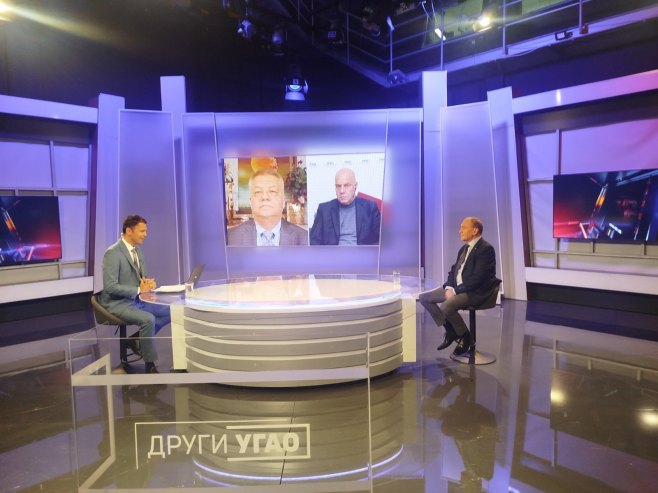

The rapidly changing global political landscape is creating new opportunities for Republika Srpska to strengthen its international position. Following the lifting of US sanctions against Republika Srpska’s leadership, political contacts that had long been restricted appear to be opening up again, according to analysts speaking on RTRS’s political program Drugi ugao (Another Perspective).
President Milorad Dodik recently returned from Florida, where he held discussions with individuals close to US President Donald Trump at Mar-a-Lago.
Political analysts believe that Republika Srpska’s diplomatic engagement with Washington is becoming increasingly important for its future, while changes in American foreign policy could also facilitate cooperation with Russia and China.
Pavić: Dodik’s US visit continues Republika Srpska’s diplomatic offensive
Political analyst Aleksandar Pavić described Dodik’s visit to the United States as another step in Republika Srpska’s ongoing diplomatic offensive.
He emphasized that diplomatic activities have intensified since Donald Trump’s return to the White House.
“The continuity has been maintained throughout this period. The pace has not slowed down; on the contrary, it has accelerated. We can now see the results, beginning with the lifting of sanctions against Republika Srpska’s leadership,” Pavić said.
He also credited the Trump administration with what he described as a reduction in the political activities of Christian Schmidt, whom he does not recognize as the legitimate High Representative in BiH.
According to Pavić, Schmidt himself acknowledged that American pressure had influenced his position.
Pavić argued that US policy toward BiH has undergone a significant transformation under Trump, particularly regarding the role of international supervision.
He pointed to statements suggesting that political responsibility should be returned to the three constituent peoples of BiH.
“At the latest UN Security Council meeting, the American position was confirmed that the mandate of the current High Representative should be brought to an end,” Pavić stated.
Trump administration represents a departure from previous US policies
Pavić emphasized that Trump’s approach differs significantly from those of previous American administrations, including those led by Joe Biden, Barack Obama and Bill Clinton.
However, he argued that the diplomatic progress would not have been possible without the proactive engagement of Republika Srpska’s political leadership.
“Without the proactive policies of Republika Srpska and its leadership, we would not have achieved these results or created such a positive atmosphere,” he said.
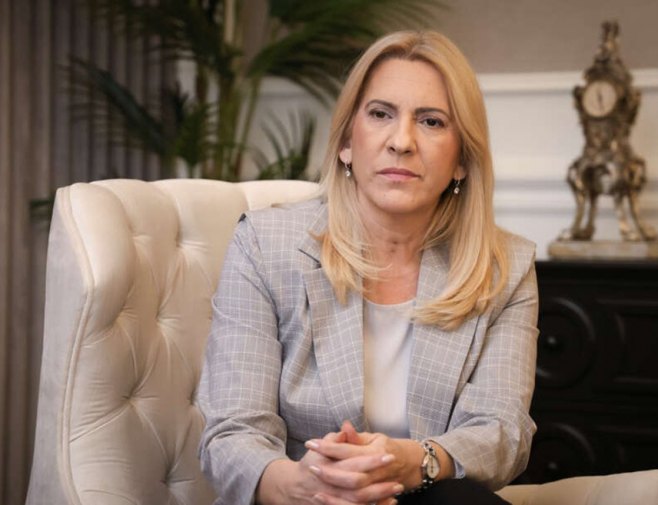
He recalled that Željka Cvijanović had visited the United States several times during the spring and summer, while Dodik had also previously held meetings with American political figures.
“What Republika Srpska has accomplished is very impressive, and this visit represents a continuation of those efforts,” Pavić added.
Pavić warns of challenges following Democratic gains in Congress
Pavić believes maintaining strong ties with the Trump administration will become even more important as the president enters the second half of his term.
Referring to the recent US midterm elections, he said the Democrats had regained majorities in both chambers of Congress.
He warned that this political shift could create additional challenges for Republika Srpska’s diplomatic activities.
“Maintaining strong connections with the American administration will be especially important now, because relations with Congress will become more challenging,” Pavić said.
He suggested that political figures favoring the approaches of the Clinton and Obama administrations toward BiH could become more influential.
According to Pavić, those policies differ fundamentally from the direction pursued by the Trump administration.
“This was an extremely important visit, and I am convinced that the intensification of contacts with the American administration will continue,” he concluded.
Kesić: Republika Srpska seeks dialogue, not foreign intervention
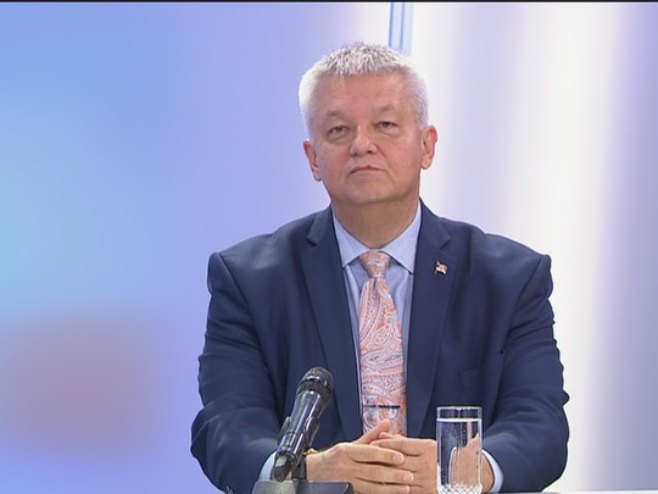
Obrad Kesić, Ambassador and Head of the BiH Mission to the European Union, highlighted what he described as a major shift in American foreign policy.
He argued that traditional multilateral economic agreements no longer occupy the same position in Washington’s foreign policy priorities.
“This is a major turning point in American foreign policy,” Kesić stated.
He emphasized the importance of communicating Republika Srpska’s political positions directly to members of the US Congress.
According to Kesić, Republika Srpska should clearly explain that it does not seek foreign interference in BiH’s internal political affairs.
“It is particularly important that this message is heard in the American Congress: Republika Srpska is not asking for intervention, while political leaders from Sarajevo continue to seek foreign intervention in the hope that it will always serve their nationalist interests,” Kesić said.
He maintained that direct engagement with American lawmakers could help establish a more balanced understanding of political developments in BiH.
Šolaja: Republika Srpska has the capacity to participate in international relations
Miloš Šolaja, professor at the Faculty of Political Sciences in Banja Luka, emphasized that Republika Srpska possesses significant institutional and political capacities for international engagement.
He referred to the Montevideo Convention, which outlines commonly recognized criteria for statehood under international law.
“Even if we considered the Montevideo Convention from a theoretical perspective, Republika Srpska is essentially a state, much more so than some other states,” Šolaja argued.
He said he was referring to entities that possess internationally recognized borders, capitals and seats at the United Nations but, in his assessment, lack other substantive characteristics of statehood.
Šolaja stressed that Republika Srpska should make use of every opportunity to establish international contacts.
Every diplomatic contact matters for Republika Srpska
According to Šolaja, Republika Srpska must maintain an active diplomatic presence despite not being among the leading foreign policy priorities of major global powers.
He argued that political representatives should not be overly selective when opportunities for international engagement arise.
“Republika Srpska is not a decisive factor in international affairs, nor does it rank highly on the foreign policy priority lists of major powers. That is precisely why every opportunity is extremely important,” Šolaja said.
The analysts agreed that continued diplomatic engagement, particularly with the United States, could strengthen Republika Srpska’s international visibility and create new opportunities for political dialogue.
They also emphasized that maintaining established contacts and expanding communication with influential international figures would remain important as the global political environment continues to evolve.
Source: RTRS