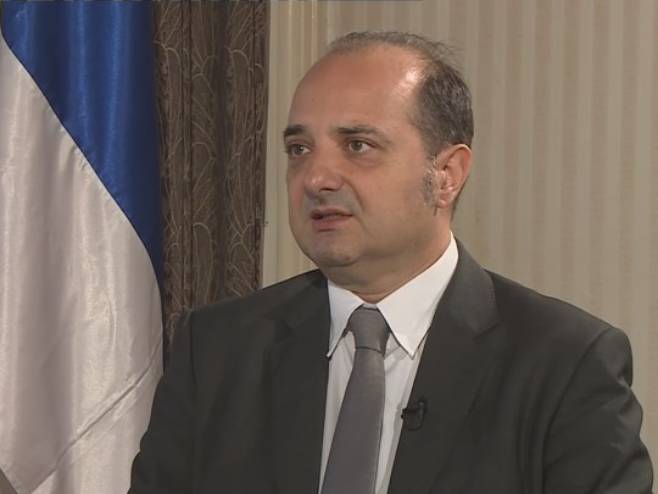

Historian Aleksandar Raković has warned that hostility toward Serbs is once again increasing in Sarajevo, arguing that an incident involving punctured tires on a vehicle belonging to Serbian tourists sends a message that Serbs are unwelcome in the city and other parts of the Federation of BiH.
Speaking to the Srna news agency, Raković described the incident as part of what he called a “Croatian scenario,” claiming that anti-Serb sentiment was the underlying motive.
“That is the only reason: to deepen hatred and send a message that Serbs are not welcome, even in a city where several hundred thousand Serbs lived just over 30 years ago,” Raković said.
He recalled that Sarajevo once had one of the largest Serb populations in the former Yugoslavia.
According to Raković, Sarajevo ranked third among Yugoslav cities in terms of its Serb population, behind Belgrade and Novi Sad, while Niš ranked fourth.
Raković advises Serbian tourists to exercise caution
Raković questioned why tourists from Serbia would choose to visit destinations where, in his assessment, they might face hostility.
“I do not understand why people feel the need to travel as tourists to places where they are not safe. It is as though they are unaware of what might await them,” he said.
He also referred to a recent children’s football tournament in Sarajevo, claiming that Serbian children and their parents had been subjected to harassment.
Raković suggested that visitors from Serbia who nevertheless wish to explore Sarajevo should consider parking their vehicles in East Sarajevo and traveling into the city by other means to reduce the risk of similar incidents.
He also recommended consulting Serbs living in the surrounding areas of Republika Srpska about local conditions before deciding whether to visit Sarajevo or other parts of the Federation of BiH.
Historian expresses concern over long-term ethnic tensions
Raković expressed pessimism about the prospects for overcoming ethnic hostility, suggesting that anti-Serb sentiment in Sarajevo could persist for decades or even centuries.
“We should have no illusions. Consider how much time has passed since the wars in Yugoslavia, yet hatred still exists, and in some places it is probably even stronger,” he said.
“In certain areas, that hostility diminished somewhat after the war. However, as we can see, it is now beginning to rise again,” Raković added.
His comments followed an incident in Sarajevo’s Breka neighborhood, where an unidentified individual punctured two tires on a vehicle bearing Belgrade registration plates during the night between Sunday and Monday.
The motive behind the vandalism has not been established, and authorities have not confirmed that the vehicle was targeted because of its Serbian registration.
Source: RTRS