
International relations expert Luciano Kaluža told SRNA that the leadership of Republika Srpska has succeeded in positioning itself as a reliable partner for senior international officials, arguing that direct contacts and relationships are more important than speeches at the United Nations, such as the recent address by BiH Presidency Chairman Denis Bećirović.
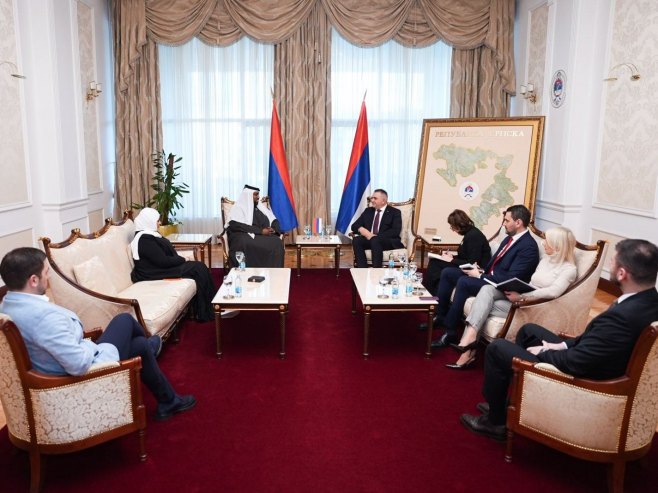
Commenting on the activities of Serb member of the BiH Presidency Željka Cvijanović in New York during the UN General Assembly, including her attendance at a reception hosted by U.S. President Donald Trump, Kaluža said meetings with international officials were more significant for building relationships than speeches delivered at international institutions.
“Mutual trust established between partners is the highest form of cooperation, and Željka Cvijanović has gained considerable trust among institutions in the United States and within the Trump administration,” Kaluža said.
He added that, in his view, this trust extends beyond Cvijanović personally to the institutions and current leadership of Republika Srpska, which he said have positioned themselves as reliable partners.
“A reliable partner means an interlocutor with whom agreements can be reached, who understands the new geopolitical environment and is prepared to engage in dialogue on an equal footing. The greatest success of Republika Srpska’s institutions is that they have managed to position themselves as trusted institutions in their relations with senior world officials,” Kaluža said.
He argued that direct meetings and the development of mutual trust are crucial for building such relationships, while speeches at the UN are more likely to be forgotten.
Commenting on Bećirović’s address to the UN General Assembly, Kaluža argued that it demonstrated the difficulties involved in establishing a common foreign policy in BiH.
“Bećirović’s address was nothing new compared with previous speeches by Presidency members from the Bosniak people. He spoke on behalf of that one people rather than presenting a harmonized position, which illustrates what BiH is actually like,” Kaluža said.
He described BiH’s foreign policy as effectively divided into three separate approaches and argued that internal political disagreements have made a common international position increasingly difficult.
“Republika Srpska has accepted that reality, and there is no possibility of creating a common foreign policy, which political Sarajevo dismantled long ago by consciously marginalizing two peoples in BiH,” Kaluža said.
Kaluža noted that Bećirović emphasized the importance of peace in his speech, but argued that instead of addressing political representatives within BiH, he once again turned to international actors and called for their involvement in the country’s internal affairs.
“He is not addressing Banja Luka or Mostar, nor is he extending a hand to build peace within BiH. He is asking for peace, according to his own perception, to be implemented through a certain degree of pressure from the international community,” Kaluža said.
Commenting on Bećirović’s statements concerning Republika Srpska, the Dayton Peace Agreement and the issue of property, Kaluža argued that his political approach remained rooted in the early 1990s and did not reflect the political changes that have taken place in BiH over the past three decades.
“The divisions within BiH have reached a political culmination,” Kaluža said.
He also described the issue of property as one of the key disputes between the entities and BiH institutions, arguing that any transfer of property to BiH-level institutions would encroach on the competencies of Republika Srpska and, in his view, violate the Dayton Peace Agreement.
Source: RTRS