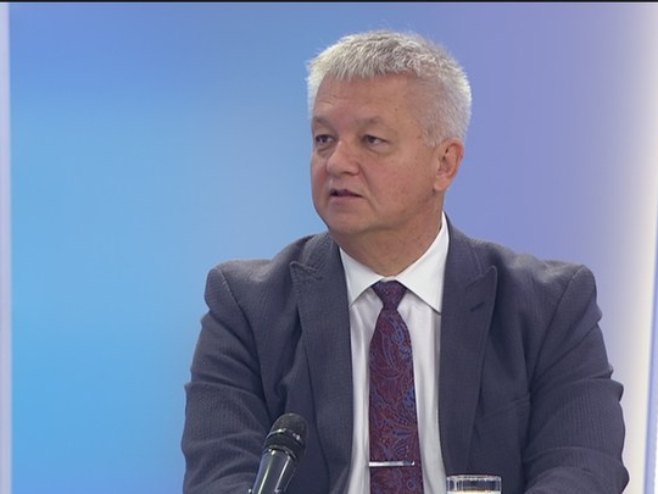




Former member of the Constitutional and Legal Affairs Commission of the Parliamentary Assembly of Bosnia and Herzegovina Petar Kunić said that the 2006 constitutional reform attempt, known as the “April package,” would have fundamentally weakened the position of Republika Srpska.
Although never adopted, the package remains controversial to this day. Some view it as a missed opportunity for a more functional state, while others believe it would have significantly reduced the powers of the entities.
Kunić stated that the proposed amendments would have transferred key competencies from the entities to the state level, effectively turning them into administrative units.
“At that time, I was shocked. The amendments drastically changed the Constitution of Bosnia and Herzegovina to the detriment of the entities, particularly Republika Srpska,” Kunić said.
He explained that the proposal included the introduction of a single president with two rotating deputies elected by parliament instead of citizens, as well as a stronger central government with reduced entity influence.
According to him, one of the most critical changes would have been giving the Parliamentary Assembly exclusive legislative authority, leaving entities without the ability to pass laws.
“If the state parliament becomes the exclusive holder of legislative power, then the entities effectively lose their authority,” Kunić emphasized.
He added that he and colleague Tihomir Gligorić proposed amendments to preserve entity competencies, conditioning their support on those changes.
Kunić claims that U.S. diplomats eventually accepted their proposals due to a lack of votes, but that the package ultimately failed in parliament, largely due to opposition from the party of Haris Silajdžić.
Reflecting on the outcome, Kunić said that without their intervention, Republika Srpska would today be “just an administrative unit.”
He also expressed skepticism about the possibility of returning to the so-called “original Dayton” framework or launching a “Dayton Two” process.
“That is not realistic. Such changes would require constitutional procedures and agreement from all sides, which is impossible under current circumstances,” he concluded.
Kunić stressed that future political representation must be more carefully selected, warning that lack of expertise and commitment in institutions has previously led to unfavorable outcomes for Republika Srpska.
Source: Glas Srpske