

If Hungary’s MOL succeeds in acquiring the Russian stake in Naftna industrija Srbije (NIS)—and thus control over the retail network operating under the Gazprom, NIS Petrol, and G-Petrol brands—the question arises as to what will happen to those fuel stations in Bosnia and Herzegovina. Several scenarios are possible, ranging from maintaining the status quo to rebranding and changes in ownership structure.
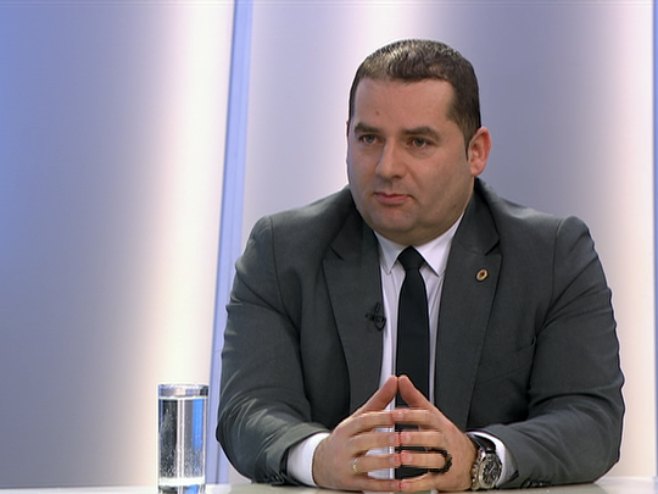
According to Đorđe Savić, chairman of the Group for Oil and Petroleum Products Trade at the Chamber of Commerce of Republika Srpska, around 40 fuel stations belonging to this network operate in Bosnia and Herzegovina. For now, it is difficult to say with certainty what business moves MOL would make—not only if the deal is completed, but also if OFAC gives the green light to lift sanctions on NIS. The most likely scenario is rebranding. Savić believes it would be most logical for the network to be gradually integrated into MOL’s system. This would mean that stations in Bosnia and Herzegovina could change their name, design, and marketing identity, while fuel offerings and services would be aligned with MOL Group standards. In such cases, a calm transition is usually implemented first. Stations in Bosnia and Herzegovina would, at least temporarily, be allowed to operate as before, without abrupt changes. In practice, this means consumers would continue refueling under the same brand name, while any changes would initially be mostly administrative.
Another possible scenario is that MOL may conclude it is not profitable to manage the network in Bosnia and Herzegovina. In that case, the Hungarian company could sell part of the stations to local investors or other oil companies.
“I think everything will depend on whether NIS continues to operate under the same name after MOL’s potential entry. Second, it is assumed that stations in Bosnia and Herzegovina operating under the Gazprom name will change their branding. Whether MOL-branded stations will open in Bosnia and Herzegovina, as in Serbia and Croatia, is hard to say,” Savić noted.
Regarding supply, Savić says there have been no problems so far, despite interruptions in deliveries of petroleum products from NIS. MOL’s entry could further stabilize the market in Bosnia and Herzegovina, as these stations would gain easier access to supplies from both the Pančevo Refinery and the Rijeka Refinery, which is also owned by the Hungarian company.
Asked how this acquisition could affect fuel prices, Savić emphasized that it would primarily depend on MOL’s business policy and economic assessments. However, he added that MOL, due to access to cheaper Russian oil, would be in a more favorable position compared to other regional players.
Economists believe that a potential sale of NIS’s majority Russian stake to the Hungarian company would represent one of the most significant energy and political-economic changes in the region over the past fifteen years. Hungarian media describe it as a strategic acquisition enabling MOL to expand its regional influence. By taking over NIS, MOL would gain the Pančevo Refinery, a dominant retail network in Serbia, and direct access to the markets of Bosnia and Herzegovina, Montenegro, and North Macedonia. In addition, MOL would retain access to cheaper Russian oil, giving it a competitive advantage.
The final sales agreement is reportedly expected to be signed by March 31. Serbia would, if the transaction is completed, hold a significant shareholding increased by an additional five percent.
A UAE company also in play
In negotiations between the Hungarian, Russian, and Serbian sides, ADNOC, the state oil company of the United Arab Emirates, is also mentioned as a potential minority investor. The entry of this global player into NIS could significantly change Serbia’s position in both energy and political terms. It would enable additional investment in modernization and capacity expansion—especially at the Pančevo Refinery—as well as improvements to logistics networks and supply chains.
Higher—and yet lower
Fuel prices at domestic petrol stations have increased by about five fenings per liter. However, Đorđe Savić points out that even after this modest rise, prices remain significantly lower than in December last year—by around 20 fenings per liter.
Source: Glas Srpske