


The 56th annual meeting of the World Economic Forum is being held in Davos under the slogan “The Spirit of Dialogue.”
The forum brings together global leaders from politics, business, civil society, and academia, with the aim of addressing key global challenges through dialogue and defining priorities for the period ahead.
The arrival of U.S. President Donald Trump is also expected. Since returning to power in January 2025, he has implemented a series of measures that have shaken the foundations of the global economy.
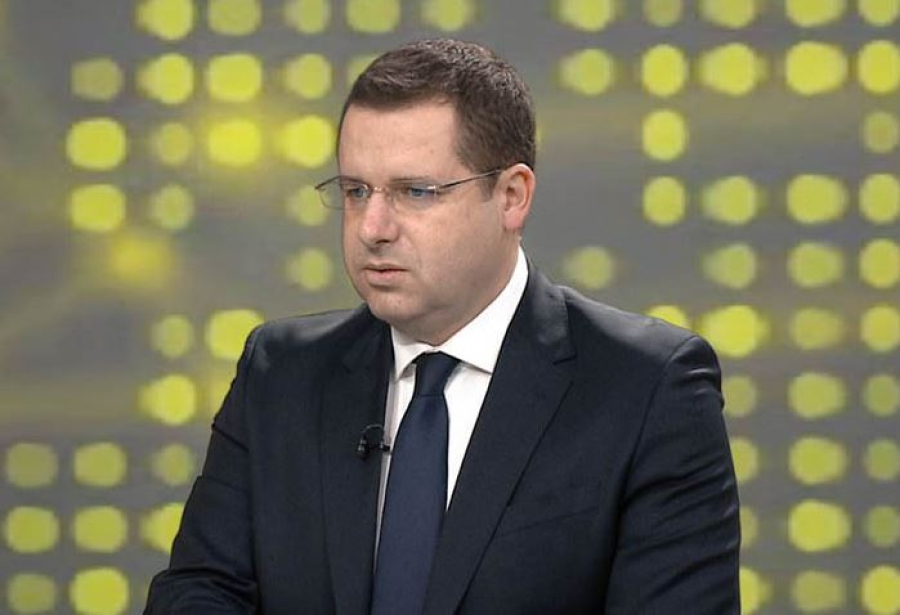
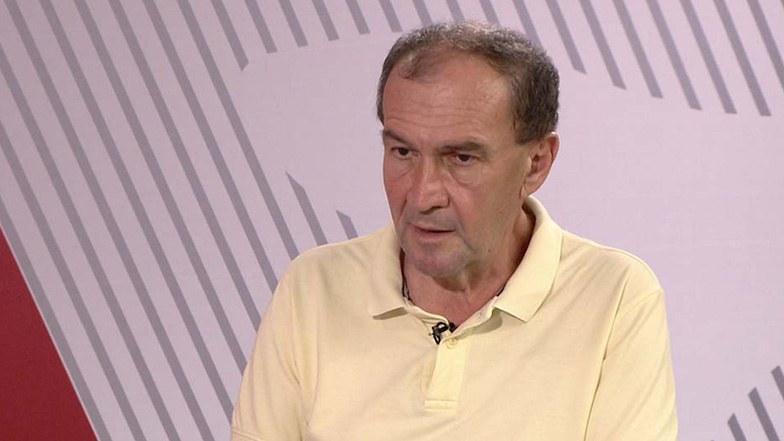
Appearing on the Morning Program, Professor at the Faculty of Political Sciences of the University of Banja Luka, Miloš Šolaja, spoke about the upcoming forum and the meeting Donald Trump is expected to hold with NATO Secretary General Mark Rutte, noting that the focus will be on transatlantic dialogue.
“This is the first time that transatlantic dialogue is at the center of attention. This is a dialogue within NATO that has opened along the U.S.–EU line. It is not only Greenland that is now relevant; there is also Trump’s withdrawal from transatlantic agreements and the introduction of protectionist tariffs on both sides. Some countries have been hit with 10 percent tariffs, Europe is responding with its own measures, and that is shaking certain political elites. There are business actors influencing politics both in the EU and in the United States, and this dialogue will largely revolve around that. When this is combined with Russia and China, it will determine directions that are already underway, namely changes in the overall international order,” Šolaja said.
He pointed out that the United States is de facto acting independently of NATO, and that this will be the reason for talks between Trump and Rutte, particularly regarding the future of NATO. Šolaja also reminded that this is not the first time NATO has been in crisis.
“The first time was in 1956, when U.S. intervention stopped the war between the United Kingdom, France, and Egypt over the Suez Canal. Many remember that NATO did not support the United States during the intervention in Iraq in 2003. There were several other crises as well, including between Greece and Turkey. Such a crisis could open again if NATO borders were called into question,” Šolaja said.
He stressed that the dialogue will not produce simple, directly communicated topics, but that it will outline the general direction of transatlantic relations and their approach toward China.
“We should not forget Gaza, nor several African conflicts that are currently active. Modern politics today is conducted in relation to resources, primarily energy. We have now moved to other natural resources—rare minerals—which for ordinary observers largely went under the radar. This will now be discussed, but within the framework of changes in the international order,” Šolaja said.
He added that the war in Ukraine has demonstrated the return of Russia’s strength.
“Russia has moved one technological generation ahead of the United States, not to mention how far ahead it is of the European Union. Today, there is no chance that contract soldiers employed by NATO member states would physically go to Ukraine, which is why Ukrainians are being pushed to suffer such heavy losses. Mercenary armies do not want to be on the front lines—they are there for pay, not patriotism. This is how the new world order should be considered,” Šolaja said.
He added that it is unclear what Europe will look like in 2050, but the real question is how people in this region will behave by then.
“It is true that states aim to position themselves above Russia and China, but the real question is how achievable that is. The United States has been the global hegemon for the past 100 years. As it entered Europe, which at the beginning of the 20th century was a global leader, it must now begin to understand that maintaining that position is becoming increasingly difficult. China has a global objective to achieve the highest GDP per capita in the world by 2049, across a population of one and a half billion people. What worries the United States most is China’s technological advancement. The new philosophy of the Chinese state is the development of sophisticated technologies and military power. Political processes are shifting toward Southeast Asia, and the moment of global hegemony is disappearing. Trump has placed Europe only third, with a very bleak assessment,” Šolaja said.
He added that European politics are increasingly being shaped around movements whose ideologies should be carefully examined.
“European politics are beginning to form around LGBT and similar movements, whose ideology should be carefully analyzed. Russia is making a major return to the global stage and is considered a rising global power. It is a pillar of multilateral organizations in the Eurasian space. Russia is bringing together a large number of countries through the BRICS platform, which was created on an anti-American basis. India has reached China in population size, and the question now is how much it will invest in social development. India is a global software hub. Today you have call centers from Banja Luka selling shoes, without being aware that this is done through India. In that sense, it is extremely advanced,” Šolaja said.
He added that all these processes influence the global order, while Trump repeatedly insists that the economy must return to the United States.
“He proposed a peace council for Gaza, but under the condition that one billion dollars be paid for membership. His way of operating is well known. There is very little American-made goods in the United States, and the economy has focused on the arms industry. Trump is cutting costs and dismantling stagnant bureaucracy. State efficiency will become a very important element of the international order. In the war in Ukraine, three quarters of the world did not impose sanctions on Russia—India, China, Brazil, South Africa, and many others did not see it as their problem; their relationship with Russia is more important,” Šolaja said.
When it comes to Greenland and the topic of potential military intervention, Šolaja pointed out that Trump demonstrates a degree of unpredictability and exclusivity that disrupts existing relations and ways of conducting global politics.
“A violent change of borders would mean the end of NATO. What would happen after that? Would it automatically mean a blow to the EU and its relations? The EU and NATO are parts of the same project, created on an anti-Soviet platform,” Šolaja said.
He emphasized that such a territorial dispute would trigger other territorial disputes.
“We see that the Hungarian foreign minister said this is not Hungary’s problem. Several NATO crises were linked to border issues between Greece and Turkey—such as in 2005 over islands in the Aegean Sea claimed by both sides, when only a spark was missing for war, not to mention Cyprus. A violent change of borders would open many issues. Realistically, Greenland is already de facto under U.S. influence: resources are used, bases exist, and various agreements are in place. But changing borders within NATO would open much broader questions, including borders between China and Japan, and China and India. Many factors are involved,” Šolaja stressed.
He concluded that Europe has become entangled in the policies it pursued in recent years.
“For the first time in history, the sovereignty of a state was violated through the recognition of Kosovo. Now this is returning to Europe’s own doorstep. Not to mention Donetsk and Luhansk and their recognition—many issues would be opened by violent border changes, for which no one is offering solutions, only the hope that they will not happen,” Šolaja concluded.
Source: RTRS