

High representatives have done whatever they wanted on the political scene in Bosnia and Herzegovina—so much so that the notorious Paddy Ashdown once dismissed 60 MPs from the Serb Democratic Party, and before him, Carlos Westendorp removed the president of Republika Srpska, Nikola Poplašen.
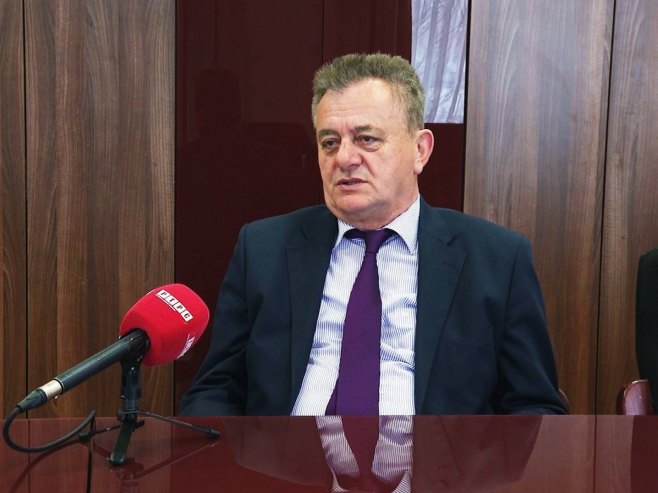
Christian Schmidt is not a legitimate high representative, and Republika Srpska has no intention of respecting his decisions, said Vitomir Popović, Doctor of Law and academician, in a statement to RT Balkan.
“The institution of the high representative is defined by Annex 10 of the Dayton Agreement, but the appointment must be made by the UN Security Council upon the proposal of the parties—Republika Srpska and the Federation of BiH,” said Popović, adding: “In this case, we had no such proposal, and both Russia and China—two major countries in the Security Council—abstained. Schmidt tried to impose himself through the Peace Implementation Council, which itself is not a Dayton creation but was introduced through the Bonn powers of 1997. Using those powers, the high representatives have imposed certain solutions in BiH,” Popović explained.
He noted that these figures essentially “acted as legislators, doing whatever they wanted in political life.”
He recalled that 60 MPs from the Serb Democratic Party were once dismissed, followed by the removal of the president of Republika Srpska, Nikola Poplašen.
“We in Republika Srpska believe that Schmidt was not appointed legally or legitimately, and any decisions he makes—or attempts to make—will not be respected or accepted. Schmidt imposed amendments to the Criminal Code, making it a criminal offense not to implement his decisions. Based on those amendments, the president of Republika Srpska, Milorad Dodik, was convicted by the Court of BiH. They now claim the high representative has full authority and can do whatever he wants—including enacting laws—despite the fact that, according to the constitution, he is not a legislator,” Popović said.
He emphasized that only the Parliamentary Assembly of BiH, together with the House of Peoples, can pass laws at the state level—and in Republika Srpska, that role belongs to the National Assembly of Republika Srpska.
“This means that we are now in a position where the court has confirmed the earlier verdict against the president of Republika Srpska, and the Central Election Commission has, based on that verdict, issued a decision to revoke his mandate,” said Popović.
He noted that strong pressure exists to reduce the powers of Republika Srpska as much as possible and to centralize BiH as a state where Sarajevo decides everything.
In his view, the National Assembly, government, and other institutions of Republika Srpska will likely adopt clear positions and act accordingly.
“It is obvious and certain that we will never recognize or implement any decision made by this so-called high representative—currently Schmidt—but there is even talk of others who could replace him, such as Stoltenberg or someone else. We must not allow this. We are a democratic society where representatives are elected through free elections, just like in any other democracy. Any imposed decrees that harm Republika Srpska or the Serb people are unacceptable,” Popović concluded.
Source: RTRS

 "UN Security Council calls for political dialogue in BiH and preservation of multiethnic democracy")