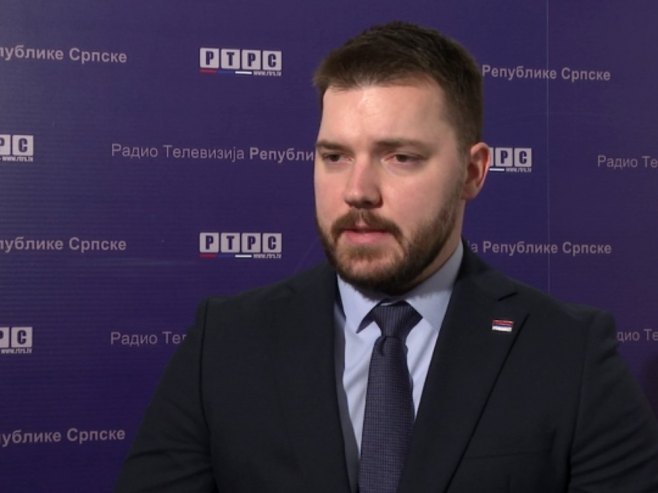


International and economic policy expert Nemanja Plotan argues that although the idea of the European Union is fundamentally noble, the policies pursued by Brussels in recent years have led what he calls the “European family” onto a political and economic dead end.
In a column for SRNA, Plotan writes that the 20th century was the bloodiest period in modern history, which is why the victors of both the World War I and the World War II established international institutions intended to prevent similar catastrophes in the future.
The EU originally began as an economic union, but its broader political goal was to stabilize a continent that had produced both world wars.
However, Plotan believes the European economic model lost its competitiveness when EU leadership chose what he describes as an ideological approach to geopolitical issues instead of adapting to global changes through a realist framework.
According to him, the institutional structure of the EU reflects what he calls a declining “rules-based order” characterized by multilateralism and international organizations.
Today, he says, many international organizations face existential crises. As an example, Plotan points to actions by Donald Trump, noting that the United States has reconsidered participation in numerous international institutions.
He also argues that the United Nations Security Council has struggled to resolve major global crises, which he interprets as a sign that the international system has entered a period of geopolitical competition.
Plotan cites the views of economist and member of the House of Lords Robert Skidelsky, who has criticized what he calls a European political and media “information bubble” surrounding the war between Russia and Ukraine.
According to Plotan, the current international environment is increasingly shaped by the rise of multiple power centers, including China, India, and countries of what is often called the Global South.
He argues that this shift represents a return to classical balance-of-power politics rather than an ideological project.
Plotan also connects global geopolitical tensions to economic consequences, particularly energy markets. He notes that tensions in the Middle East have driven up the price of Brent crude oil, which he says has contributed to economic pressure on Europe due to its high reliance on imported energy.
In his view, one of the central challenges facing the EU is its internal political heterogeneity. Countries such as Poland, Germany, Hungary, and France often pursue differing strategic priorities, making it difficult for the EU to speak with a unified geopolitical voice.
Plotan concludes that in an emerging multipolar order, international actors that fail to adapt to changing geopolitical realities risk losing influence on the global stage.
Source: RTRS