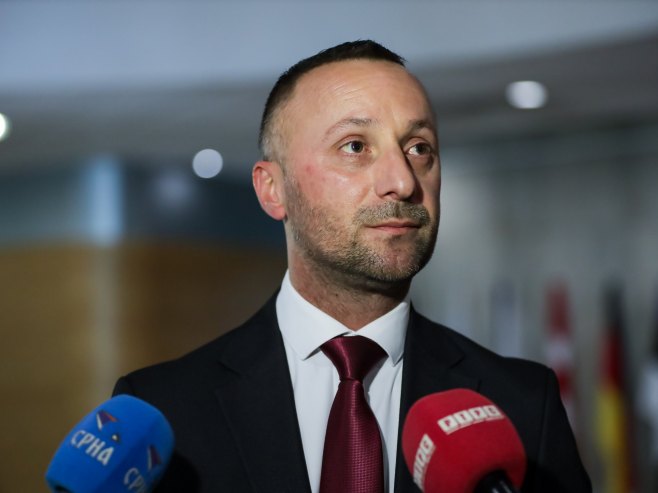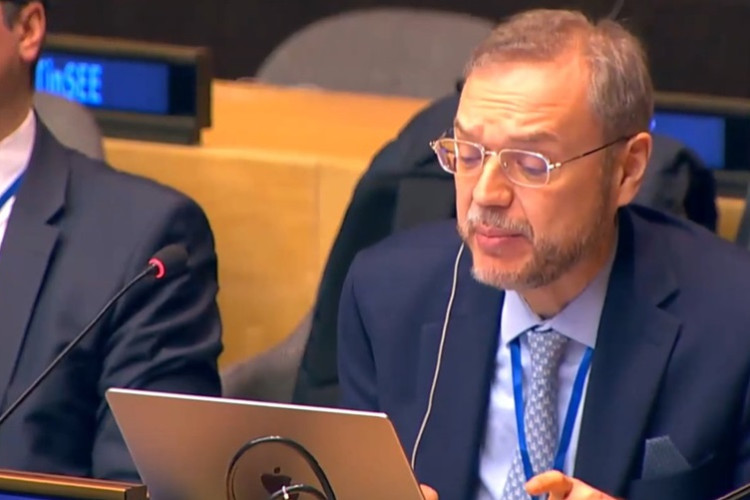



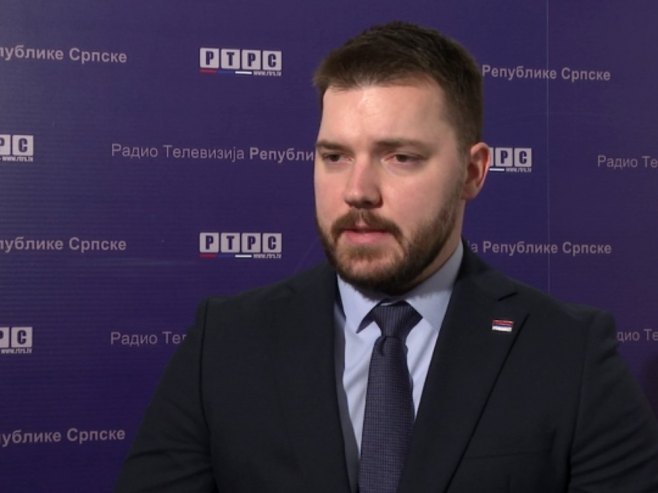
Instead of promoting genuine liberal decentralization—where responsibility and decision-making are entrusted to elected representatives at the local and entity levels—the Office of the High Representative (OHR) has for years pushed the centralization of Bosnia and Herzegovina under the pretext of “efficiency” and “stability,” said international and economic policy expert Nemanja Plotan.
Below is Nemanja Plotan’s column in full:
At a time when the European Union is once again trying to accelerate enlargement toward the Western Balkans, Bosnia and Herzegovina finds itself at a crossroads between promises and reality.
With the European Commission’s recent approval of the Reform Agenda in December 2025, Brussels gave the “green light” for access to funds from the Growth Plan for the Western Balkans, which promises integration into the single market and support for reforms.
However, while Montenegro and Albania are moving toward the possible closure of negotiations as early as 2026 or 2027, Bosnia and Herzegovina continues to stagnate due to internal divisions and slow implementation of key reforms.
Over the past 20 years, the EU integration process in the Western Balkans has resembled a Latin American telenovela, with Brussels acting like a toxic partner unwilling to commit, while at the same time preventing Western Balkan states from politically and economically “courting” other partners.
In many pro-liberal media outlets, the slogan “the EU has no alternative” has long been repeated, which—given the geographic position of the Western Balkans, especially landlocked countries—is, to a degree, true.
The very term “geopolitics” points to geography as the main variable shaping political processes. The geopolitics of the Western Balkans make the EU the closest and most important political and economic partner, which renders membership a logical step. Yet Brussels’ policy over the past two decades has reached a peak of political disorientation, particularly evident in its approach toward Bosnia and Herzegovina.
Rather than offering a flexible mechanism to support transition, the Brussels administration often imposes rigid procedures that ignore regional specificities and send citizens the message that they do not belong to the same European family. A recent example is the changes to entry/exit systems at EU border crossings.
Long queues, biometric data collection upon entry and exit, and separate lanes for EU citizens and everyone else risk not only seriously harming Western Balkan producers—by slowing transport and increasing costs—but also signaling to citizens that they are not welcome in the EU.
Here, bureaucratic rigidity prevails over pragmatic solutions, generating frustration in a region that is economically intertwined with the EU yet still treated as a “third party.”
One reason lies in the practice in many European countries of moving politically less successful figures, or those nearing the end of their mandates, into European institutions—where accountability is diluted and direct ties to voters are weak.
This leads to a concentration of decision-making in the hands of a bureaucracy often detached from the everyday realities of member states and candidates. The result is abstract and ineffective policies, including those that produced years-long enlargement stalemates despite geopolitical pressures calling for faster progress.
In recent months, statements by EU officials—though formally filled with promises of open doors and support—have in fact revealed deep dissatisfaction and a reluctance to accept Bosnia and Herzegovina without “fundamental reforms.”
The Head of the EU Delegation to Bosnia and Herzegovina, Luigi Soreca, openly repeated the well-known EU mantra: “When you deliver, we deliver.” While it is true in principle that Bosnia and Herzegovina is stagnating due to internal political paralysis, it is important to note that Brussels has also contributed to the crisis by supporting the OHR’s interventionist approach.
Instead of fostering genuine liberal decentralization—where responsibility and decision-making rest with elected local and entity authorities—the OHR has for years imposed centralization under the guise of “efficiency” and “stability.”
This strategy ran directly counter to the Dayton Peace Agreement, which clearly prioritizes the entities in all areas not explicitly transferred to the state level.
Paradoxically, the EU itself supported this centralization, even though it directly contradicted the Union’s own foundational principle of subsidiarity—that decisions should be made as close to citizens as possible.
Rather than making politics more authentic and closer to people, the OHR has ensured that almost every major decision in Bosnia and Herzegovina appears foreign—dictated from the outside rather than arising internally—deepening political paralysis and further complicating the EU integration process.
In response to such crises, Brussels officials have increasingly shifted blame onto Republika Srpska and applied additional pressure—from threats by Marta Kos of financial leverage that could cost hundreds of millions of euros in funds, to urgings by Ursula von der Leyen to take basic steps such as appointing a chief negotiator.
Bosnia and Herzegovina is continually expected to demonstrate greater seriousness about EU membership. Yet it is difficult to imagine a scenario in which a country that remains the world’s last protectorate can be taken seriously within Brussels’ bureaucratic circles.
If Brussels, as the stronger negotiating partner, truly wants to demonstrate genuine interest in Bosnia and Herzegovina’s EU membership, it should do so through actions rather than rhetoric—by ending support for the OHR’s interventionist policies and advocating the abolition of the Bonn powers.
EU membership is possible only through strict respect for the letter of Dayton, which should chart the path of Bosnia and Herzegovina’s democratic development and EU integration.
Source: RTRS