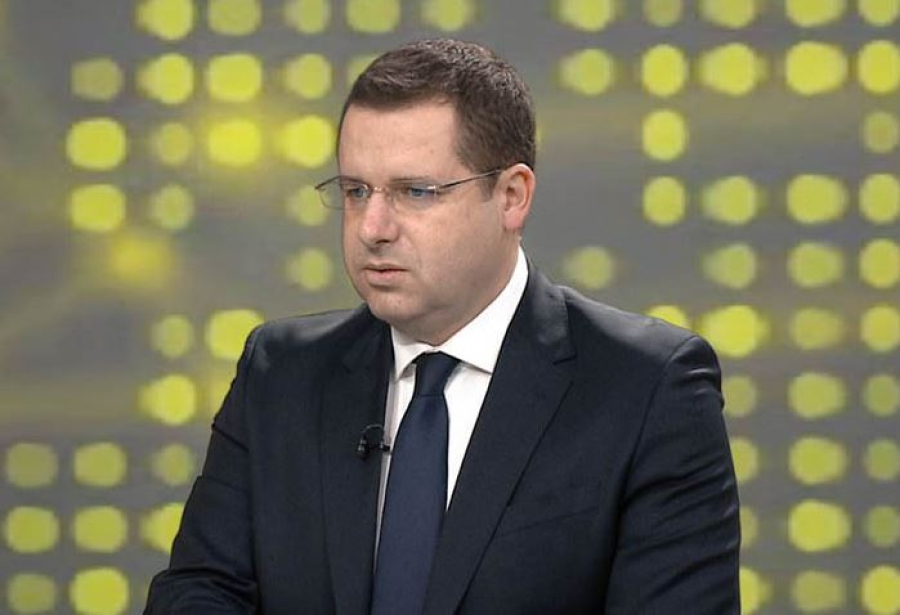


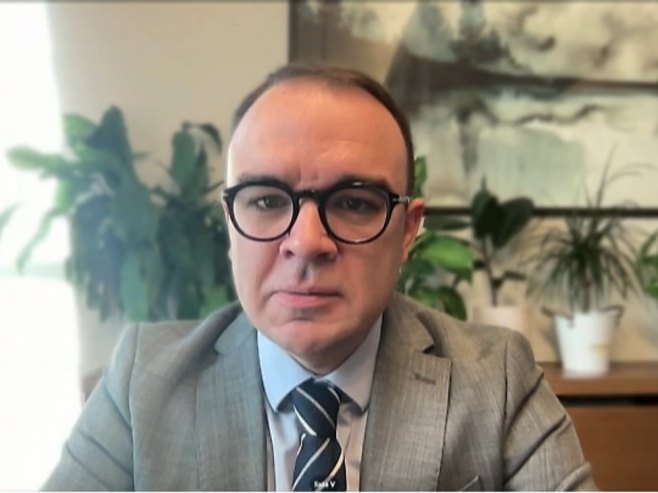
Aleksandar Vranješ, Bosnia and Herzegovina’s ambassador to Serbia, said today that Republika Srpska has successfully repositioned itself and now maintains good relations with both Moscow and Washington—something that, he noted, Sarajevo could not even imagine.
Vranješ emphasized that SNSD leader Milorad Dodik, Serb member of the Presidency Željka Cvijanović, and other officials have managed to reach a point where Washington does not object to Republika Srpska’s good relations with Moscow, nor does Moscow object to Srpska’s good relations with Washington.
“There was hardly an international forum where the Minister of Foreign Affairs in the Council of Ministers, Elmedin Konaković, did not begin his speeches by saying that Dodik is Putin’s man in the Balkans—something that no longer bothers Washington at all,” Vranješ said in an interview with Prva TV.
He recalled that during Dodik’s visit to Moscow, the president of Republika Srpska informed Russian President Vladimir Putin, Foreign Minister Sergey Lavrov, and Secretary of the Security Council Sergey Shoigu that Republika Srpska was increasing the level of understanding with the United States—an approach they supported, saying Srpska would have their backing for anything that eases pressure on it.
According to Vranješ, this new reality has caused shock in Sarajevo, which is struggling to adapt to the change, while continuing to do everything it can to undermine Republika Srpska—whose name, he noted, no Bosniak intellectual or political representative even pronounces, referring to it instead as “RS.”
He explained that Bosniak political strategy is based on shifting attention away from its own problems toward Republika Srpska and on cheering for Christian Schmidt, despite the fact that Schmidt suspended the Constitution of the Federation of Bosnia and Herzegovina for 24 hours—an unprecedented move globally.
Vranješ added that the same approach applies to well-founded suspicions of money laundering by drug cartels through government bodies, including the Sarajevo Canton, as well as links to Islamic extremists and terrorists, strained Bosniak–Croat relations, and a range of other issues. These, he said, are pushed aside in the Federation by attempts to divert attention with stories about Russian influence in Republika Srpska, separatism, or fabricated claims that people in Srpska allegedly have nothing to eat.
He pointed out what he called double standards, noting that Bosniak politicians invoke the disputed 2013 census when it suits them, but revert to the 1991 census when dividing ministerial, parliamentary, and other posts.
“When it suits them, they cite figures from the disputed census, but they avoid mentioning that it shows only one to two percent of Serbs living in the Federation, while Republika Srpska has 18 percent Bosniaks. That speaks volumes about the scale of ethnic cleansing and about who had it harder,” Vranješ said.
Speaking about the current situation in Republika Srpska, Vranješ said a successful maneuver had prevented an attempt to trigger institutional chaos via the Constitutional Court of Bosnia and Herzegovina.
“It is striking that the opposition in Republika Srpska cheered for the Constitutional Court to bring down the Government and all its acts, which shows they are acting in a completely anti-state manner toward Republika Srpska,” he said.
He assessed that the public clearly sees this and understands that cheering for the creation of institutional chaos cannot benefit Republika Srpska.
“The opposition may criticize, but it cannot work against its own state. They imagine coming to power by letting everything in Republika Srpska burn down, and then taking power amid chaos and ashes. That is not how power is gained,” Vranješ said.
He expressed confidence that Siniša Karan would win on February 8 and secure more votes at polling stations where elections are being repeated—something the opposition and its sponsors, he said, know well, which is why they continue to stall in order to generate chaos.
Vranješ concluded that in these turbulent times, Serbs in Republika Srpska need to be more unified than at any point in the past 30 years and work together in the interest of their country.
Source: RTRS