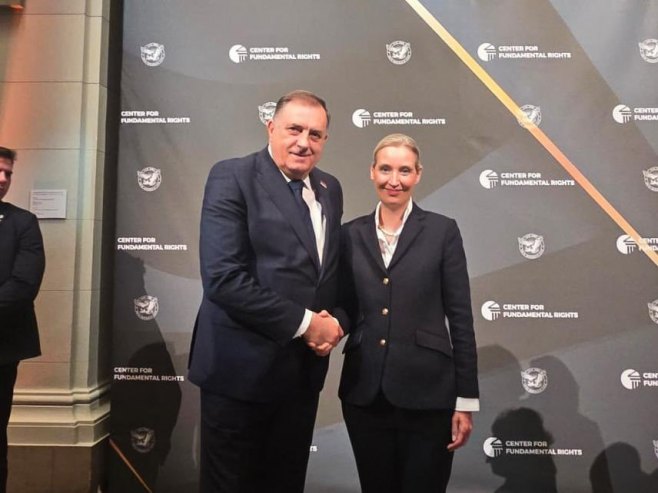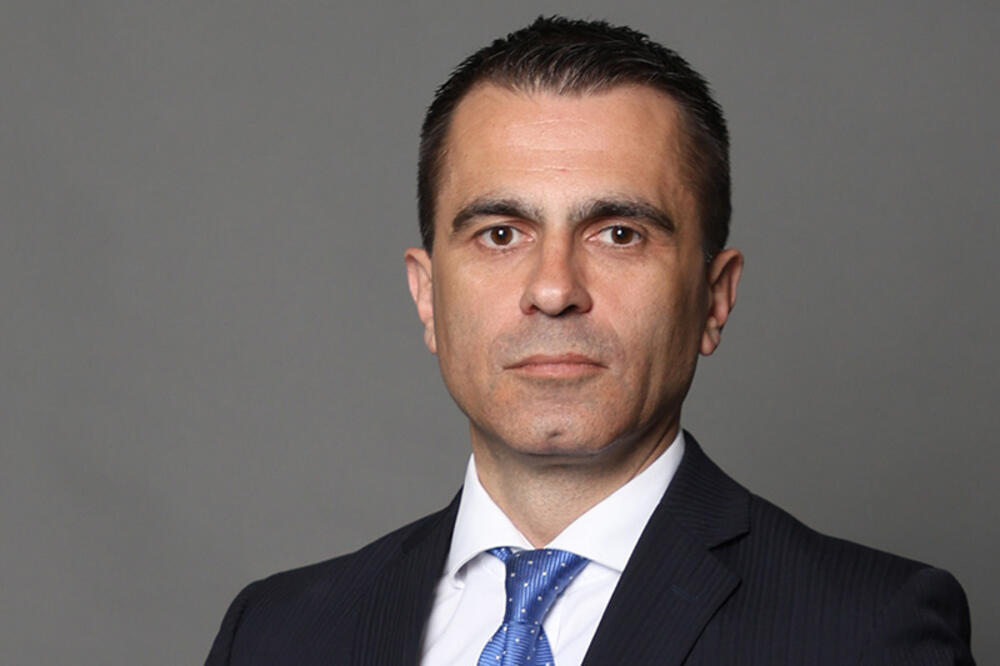



President of SNSD, Milorad Dodik, stated that his ultimate political goals are the right to self-determination, a peaceful separation within Bosnia and Herzegovina, and the independence of Republika Srpska.
Speaking as a guest on the RTRS programme Telering, Dodik said these goals are a response to what he described as decades-long attacks on Republika Srpska.
“The goal has always been the same; only the means and methods have changed,” Dodik said.
Self-determination as a response to imposed authority
Referring to what he called attacks and the stripping of competences guaranteed to Republika Srpska by the Constitution and the Dayton Peace Agreement, Dodik argued that Republika Srpska therefore has the right to self-determination.
He criticized the role of the so-called High Representative, saying that the powers exercised by that office were never granted by the Constitution nor by the Dayton Agreement, but were enforced through “sheer force.” According to Dodik, once such practices became politically untenable, pressure was shifted to the Constitutional Court of Bosnia and Herzegovina, which he said operated through decisions made by foreign judges together with Bosniak representatives.
Dispute over elections and mandate
Dodik also linked these issues to the process of extraordinary presidential elections, claiming that the Central Election Commission of Bosnia and Herzegovina unlawfully stripped him of his mandate. He argued that the decision to repeat elections at 136 polling stations amounted to a denial of Republika Srpska’s electoral rights.
“You cannot hold repeat elections two and a half months later. Those are new elections. Repeat elections can happen within a week or two, as in any normal country,” Dodik said, adding that restrictions on campaigning and sanctions for public statements further undermined democratic standards.
According to him, these developments would inevitably lead Republika Srpska to reaffirm its political objectives, including drafting a new constitution and adopting its own election law.
Dodik also claimed that Siniša Karan won the elections, and alleged that repeat voting was ordered primarily in areas where SNSD traditionally achieves strong results.
Criticism of the opposition
Commenting on the opposition, Dodik said he had not heard clear positions from Serbian Democratic Party leader Branko Blanuša on key political issues, including Srebrenica, Bratunac, the role of Christian Schmidt, or the future of Bosnia and Herzegovina.
“From him, you hear nothing but attacks,” Dodik said, adding that while he respects Blanuša’s academic background, academic credentials alone do not equate to political experience in practical, field-based politics.
Source: Glas Srpske