


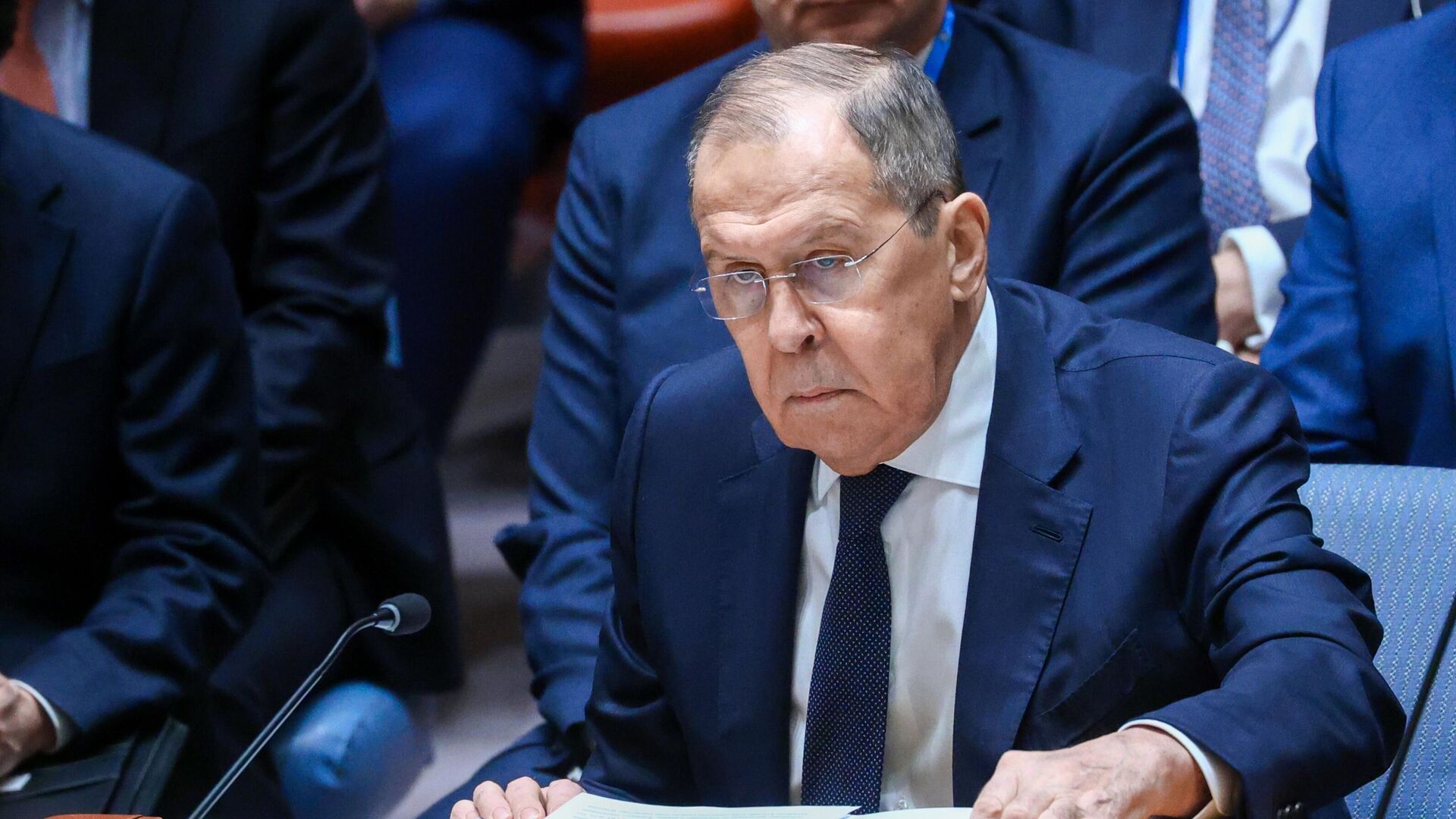
Leading Western countries initially acted as partners in helping implement the Dayton Agreement, but driven by their own self-serving interests, they soon began dismantling its foundations, Russian Foreign Minister Sergey Lavrov said on the 30th anniversary of the signing of the General Framework Agreement for Peace in Bosnia and Herzegovina.
In an op-ed for Politika, Lavrov recalled that the agreement, previously initialed in Dayton (Ohio, USA), stopped a devastating conflict that claimed more than 100,000 lives and displaced over two million people.
He emphasized that the Dayton Agreement was not a cure-all for political and social divisions that emerged after the breakup of Yugoslavia but that its greatest achievement was ending the bloodshed and enabling a return to peaceful life.
According to Lavrov, Dayton embodies the need for compromise and for solutions acceptable to all sides. It established the fundamental principles of equality among the three constituent peoples — Bosniaks, Serbs, and Croats — and confirmed the broad constitutional powers of the two entities, Republika Srpska and the Federation of BiH.
He stressed that the agreement clearly delineated the competencies of different levels of government and created a decentralized system in which key state-level decisions must be reached through consensus.
Lavrov noted that Russia, as a witness to the signing of the peace agreement, is one of the international guarantors responsible for protecting its principles.
However, he said, Western countries shifted away from acting as partners and began undermining Dayton’s architecture. According to Lavrov, the West launched a political campaign aimed at unitarizing Bosnia and Herzegovina, stripping Serbs and Croats of their Dayton-guaranteed rights, and pushing the country toward NATO against the will of its peoples.
He criticized the imposition of the so-called “civic model,” arguing that its real goal is to enable political elites from only one of the three constituent peoples to advance externally driven plans at the expense of the others. Lavrov warned that such unilateral moves destabilize the region and recalled that bypassing the will of Serbs in BiH in 1992 led to the outbreak of war.
Lavrov described the Office of the High Representative as a major source of instability, claiming it has evolved from a supervisory mechanism into a tool for Western interference. He criticized the “appointment” of Christian Schmidt without approval from the UN Security Council, calling his decisions legally meaningless.
He said the first step toward normalization must be the immediate and unconditional closure of the OHR. True sovereignty for Bosnia and Herzegovina, he argued, requires ending foreign oversight and allowing the country’s peoples to decide their own future.
Lavrov warned of broader regional consequences as well. He accused Western states of ignoring UN Security Council Resolution 1244 on Kosovo* and encouraging actions by Pristina that violate Serbia’s territorial integrity. He also pointed to attempts to create military alliances involving Kosovo* as a serious destabilizing factor and a direct violation of the Dayton Agreement’s military provisions.
Lasting stability in Bosnia and Herzegovina and the Balkans, Lavrov stressed, can be achieved only by strictly adhering to the international legal foundations of the Dayton Agreement. Any changes must come exclusively from consensus among all peoples of BiH, without external pressure.
Russia, he concluded, will continue to uphold Dayton’s key principles and calls on the international community — as well as all domestic actors — to do the same in the interest of BiH’s sustainable development, the well-being of both its entities, and long-term regional security.
Source: RTRS